


Our study has been featured in:


For decades, “googling” has been the umbrella term for searching online. If you are looking for something, you google it. But is that still true? Our State of Search survey offers fascinating insights into how people in Germany search!

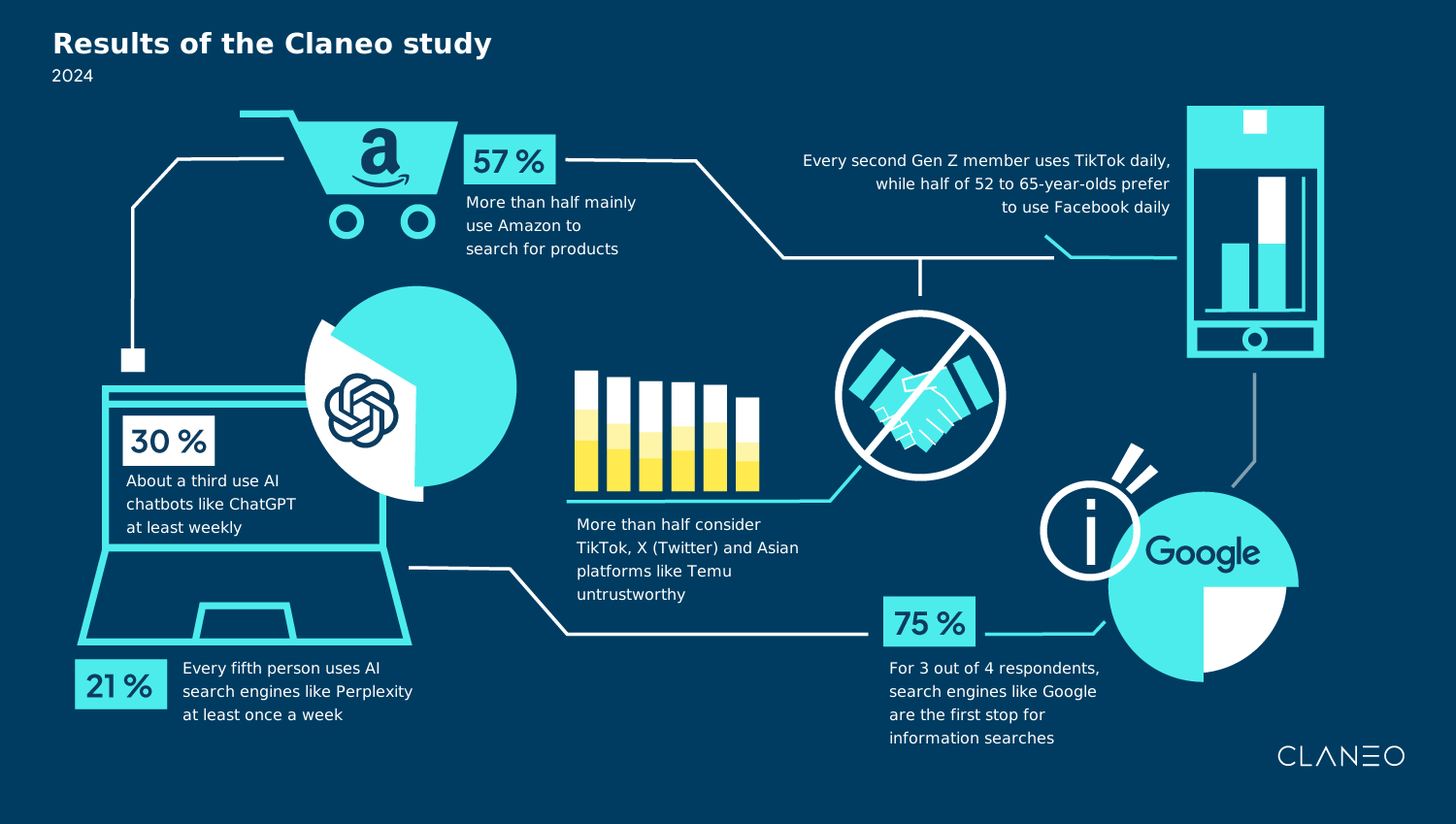

Frequency of use: Google ahead of social media, young people far more familiar with AI chatbots and TikTok
Almost two thirds of all respondents said they use search engines like Google every day. Expanding the range to every 2 to 3 days, the figure rises to over 81 percent in total. Instagram follows at some distance with over 50 percent daily use. Only about 2.3 percent said they never use search engines like Google. Across all platforms studied and all age groups, search engines like Google are therefore the most frequently used platforms. AI search engines (such as Perplexity, You.com and similar) are already fairly common in Germany but are rarely used daily. Still, around 20 percent use them at least once a week. Overall, there is a clear age difference: the younger the users, the more often they already use AI chatbots and platforms like TikTok. Instagram is the most popular social network for all age groups. Facebook, on the other hand, is used more frequently with increasing age.

Daily platform use
| Platforms | Total | 16 to 27 | 28 to 39 | 40 to 51 | 52 to 65 |
|---|---|---|---|---|---|
| Search engines like Google, Bing etc. | 62% | 64% | 66% | 65% | 54% |
| TikTok | 34% | 49% | 33% | 30% | 22% |
| Price comparison like Check24, Idealo, MyDealz etc. | 8% | 8% | 12% | 7% | 3% |
| YouTube | 48% | 52% | 57% | 49% | 34% |
| 53% | 69% | 57% | 51% | 35% | |
| ChatGPT or other chatbots/AI | 7% | 12% | 10% | 4% | 2% |
| Asian e-commerce platforms like Alibaba, Shein, Temu etc. | 7% | 8% | 14% | 3% | 3% |
| Amazon | 19% | 16% | 24% | 22% | 13% |
| Online platforms like Zalando, booking.com, MediaMarkt/Saturn etc. | 7% | 8% | 12% | 8% | 1% |
| 45% | 22% | 50% | 55% | 52% | |
| AI search engines like Perplexity, you.com etc. | 6% | 6% | 7% | 6% | 3% |
| 8% | 12% | 13% | 4% | 1% | |
| X (Twitter) | 13% | 14% | 16% | 15% | 8% |
| 12% | 12% | 13% | 13% | 9% |
Share of each age group in percent that uses the respective platform daily. Source: Claneo State of Search Study 2024
Search behavior varies
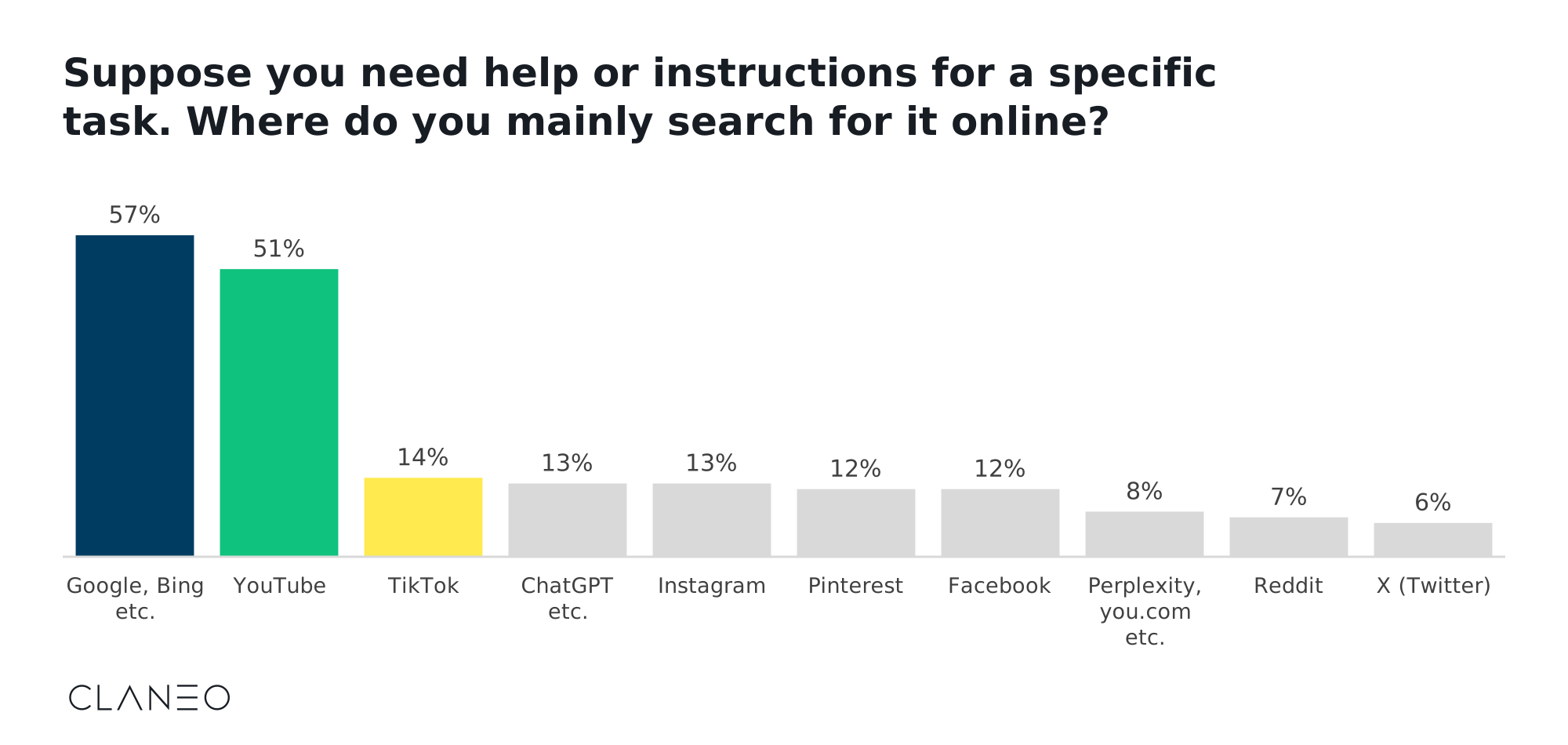
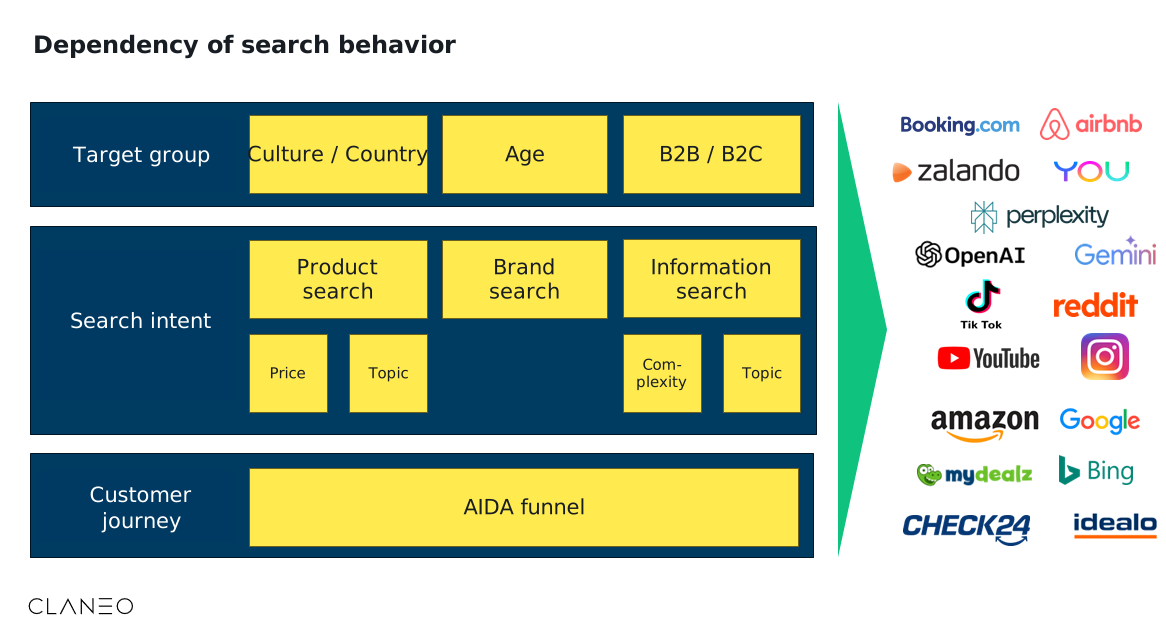
The analysis showed that people know where to find things. They use different platforms depending on their search need. When it comes to general information, search engines like Google remain the medium of choice. The large majority said they mainly use Google when they want to find information online.

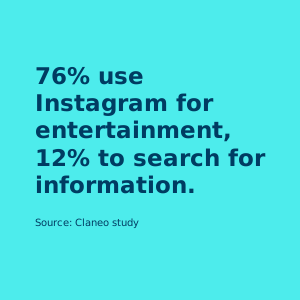
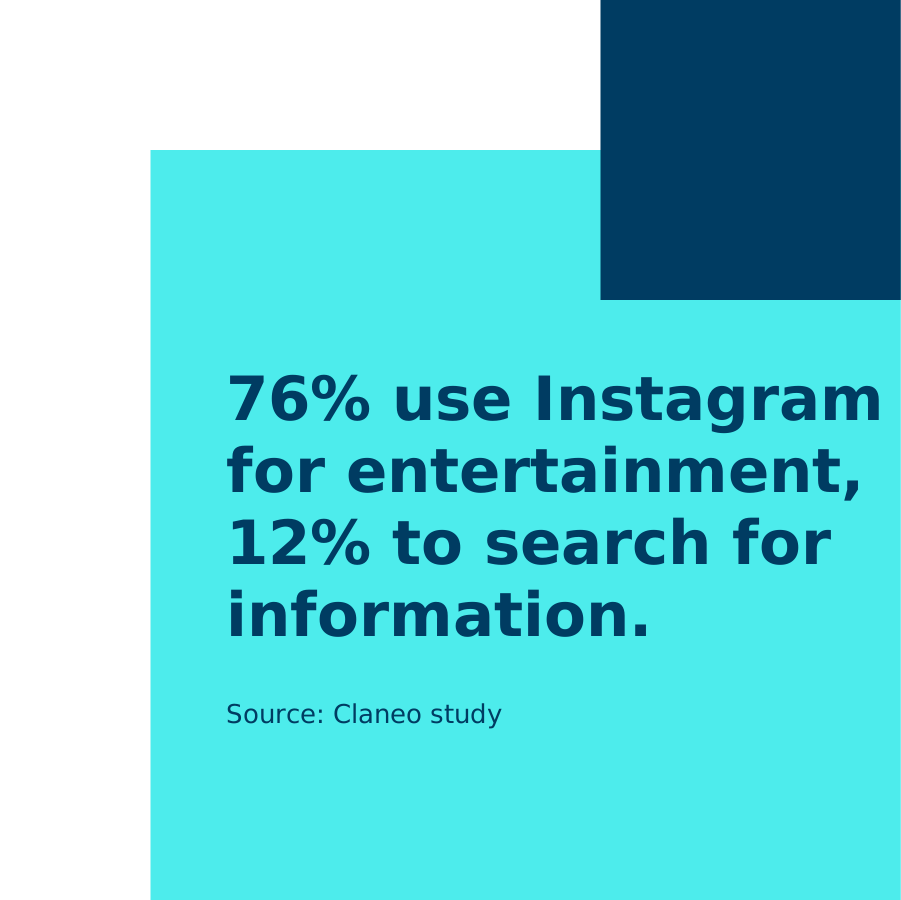
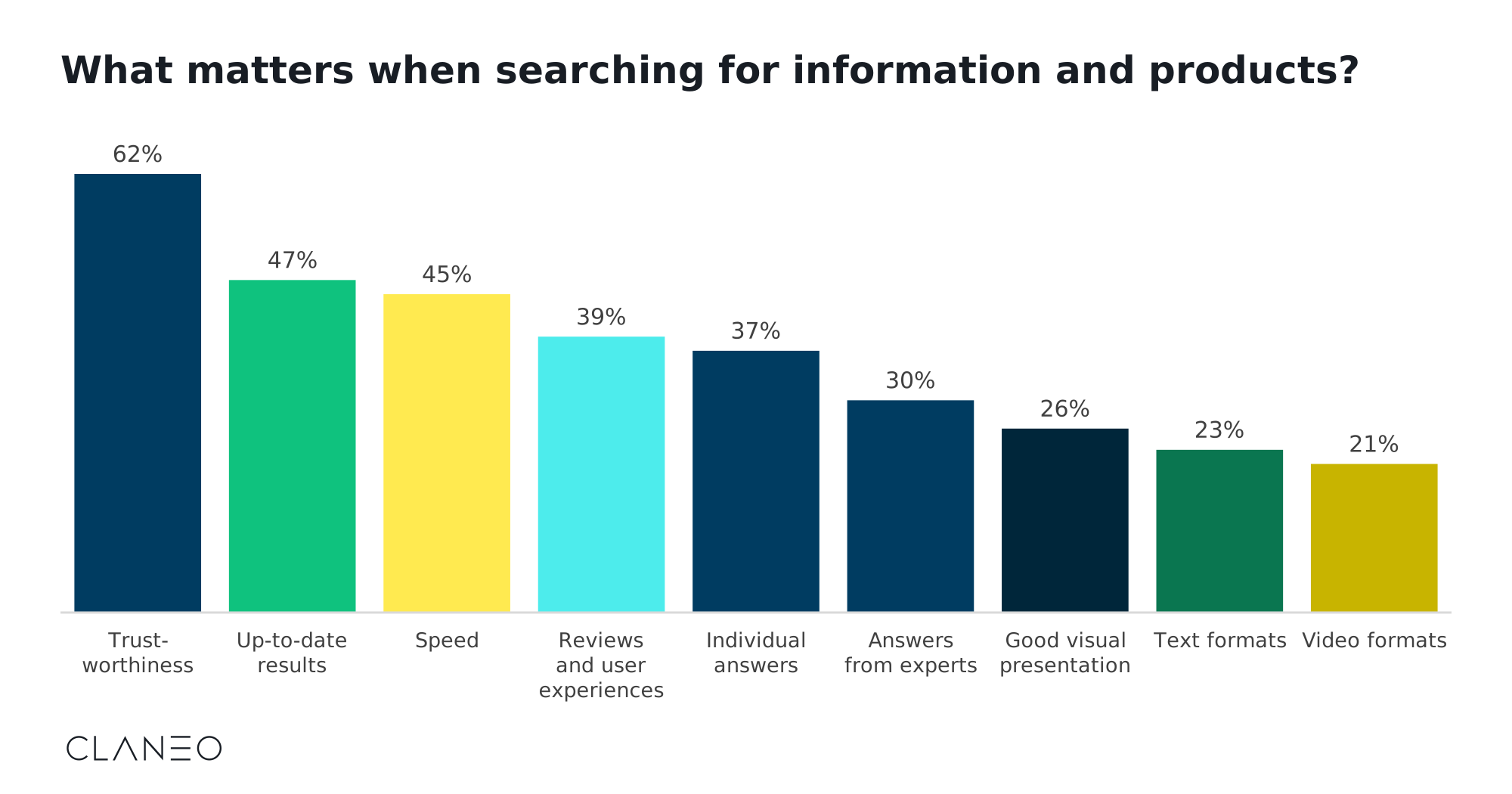
Online search has to be fast and trustworthy, not entertaining
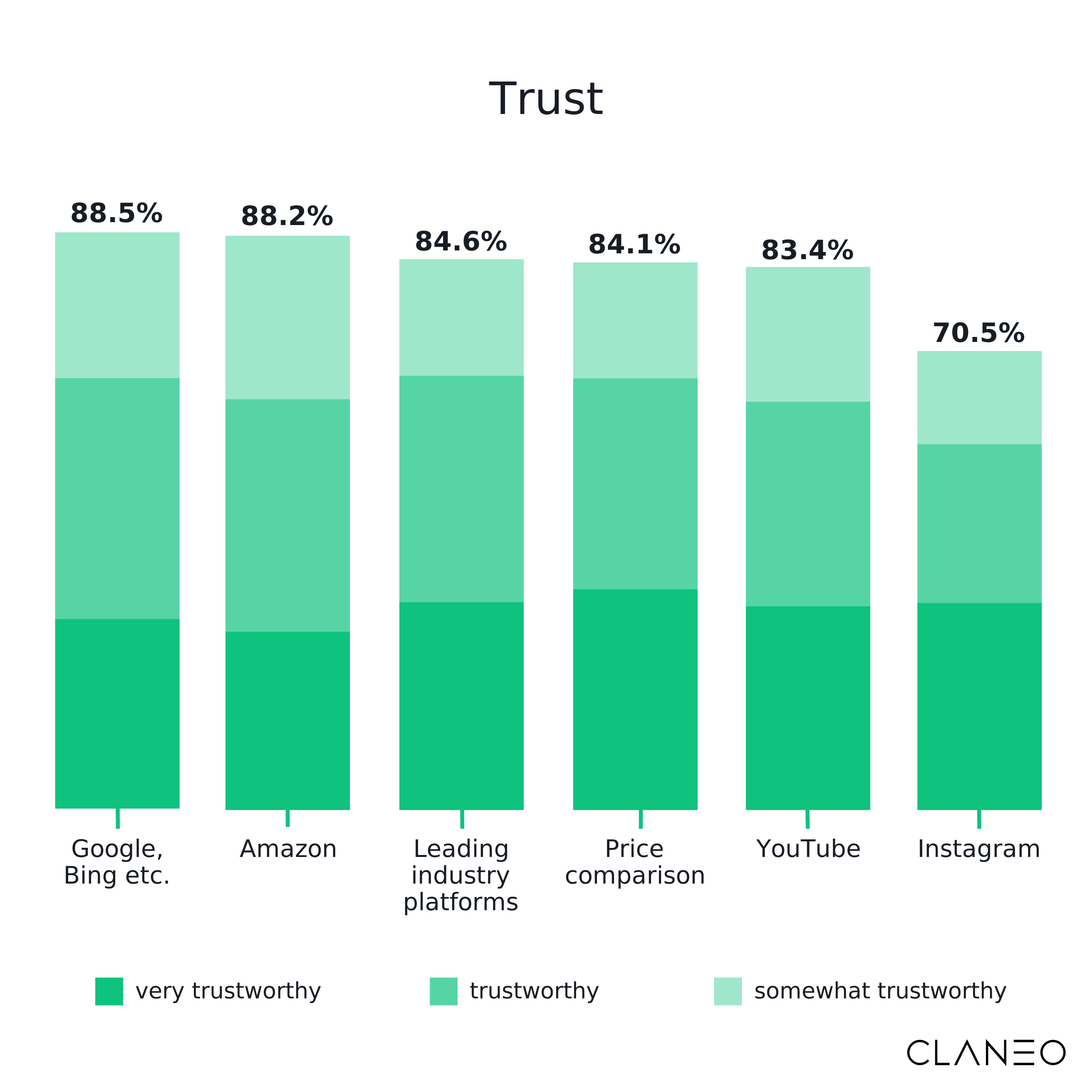
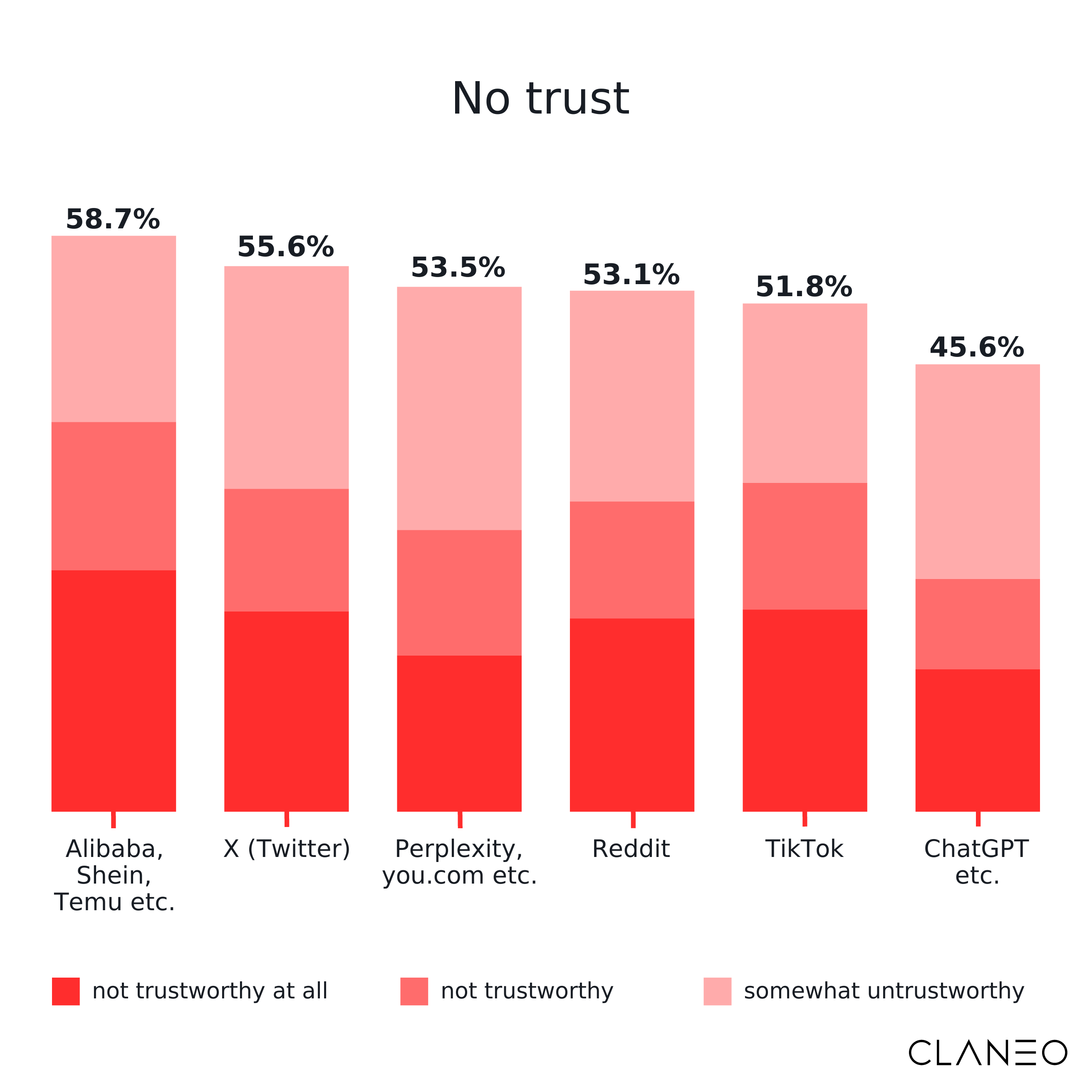
How trustworthy are the platforms?
Google and Amazon are trusted the most

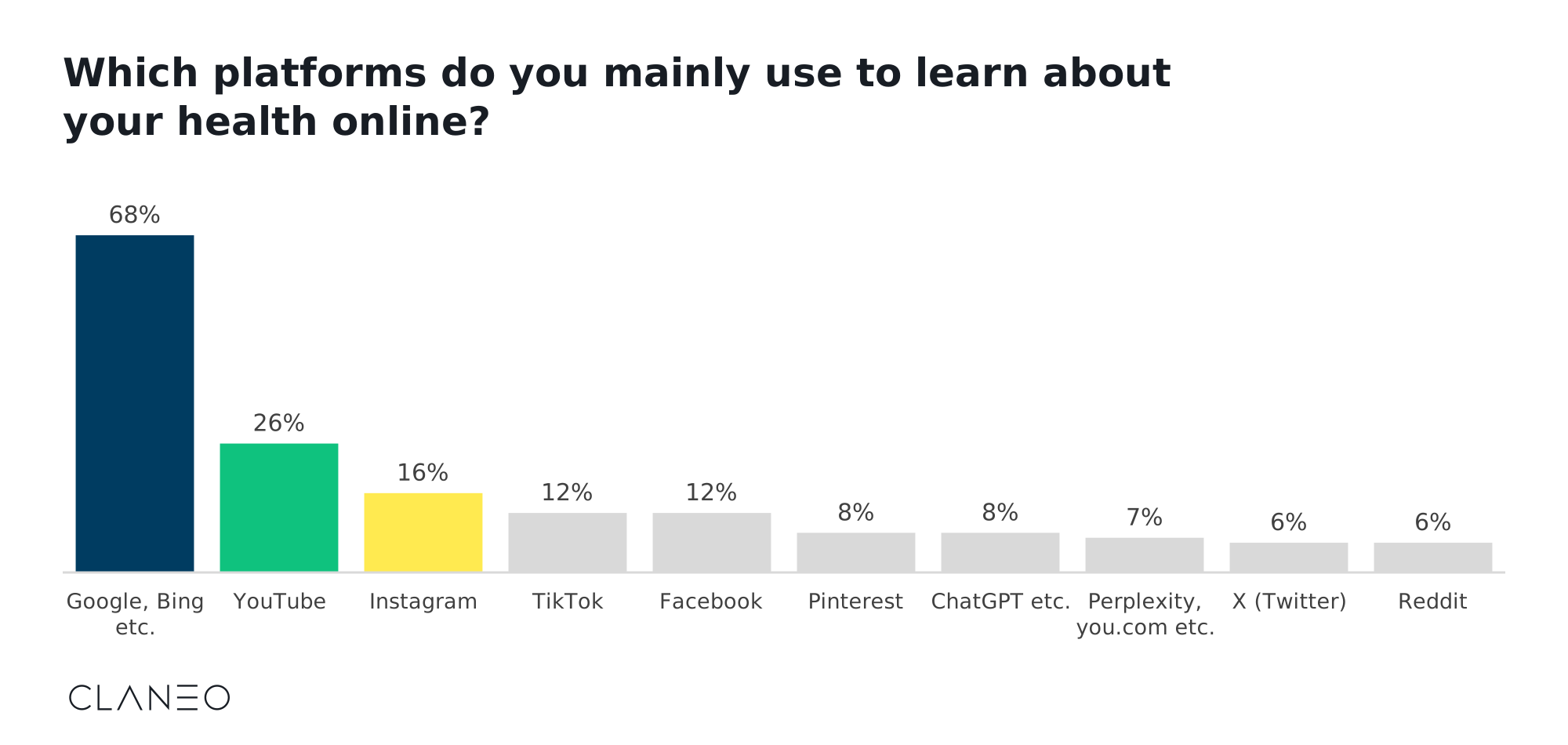
Services, how-tos and medical questions are answered by Google
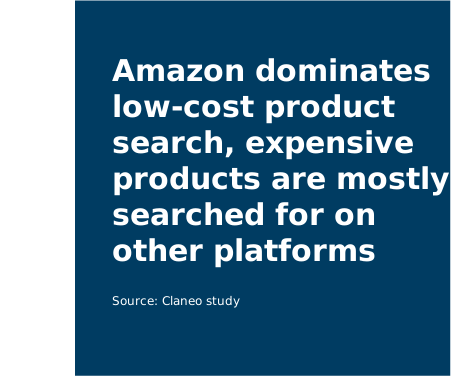
Amazon is the top shopping destination for products, Google only in 3rd place for clothing
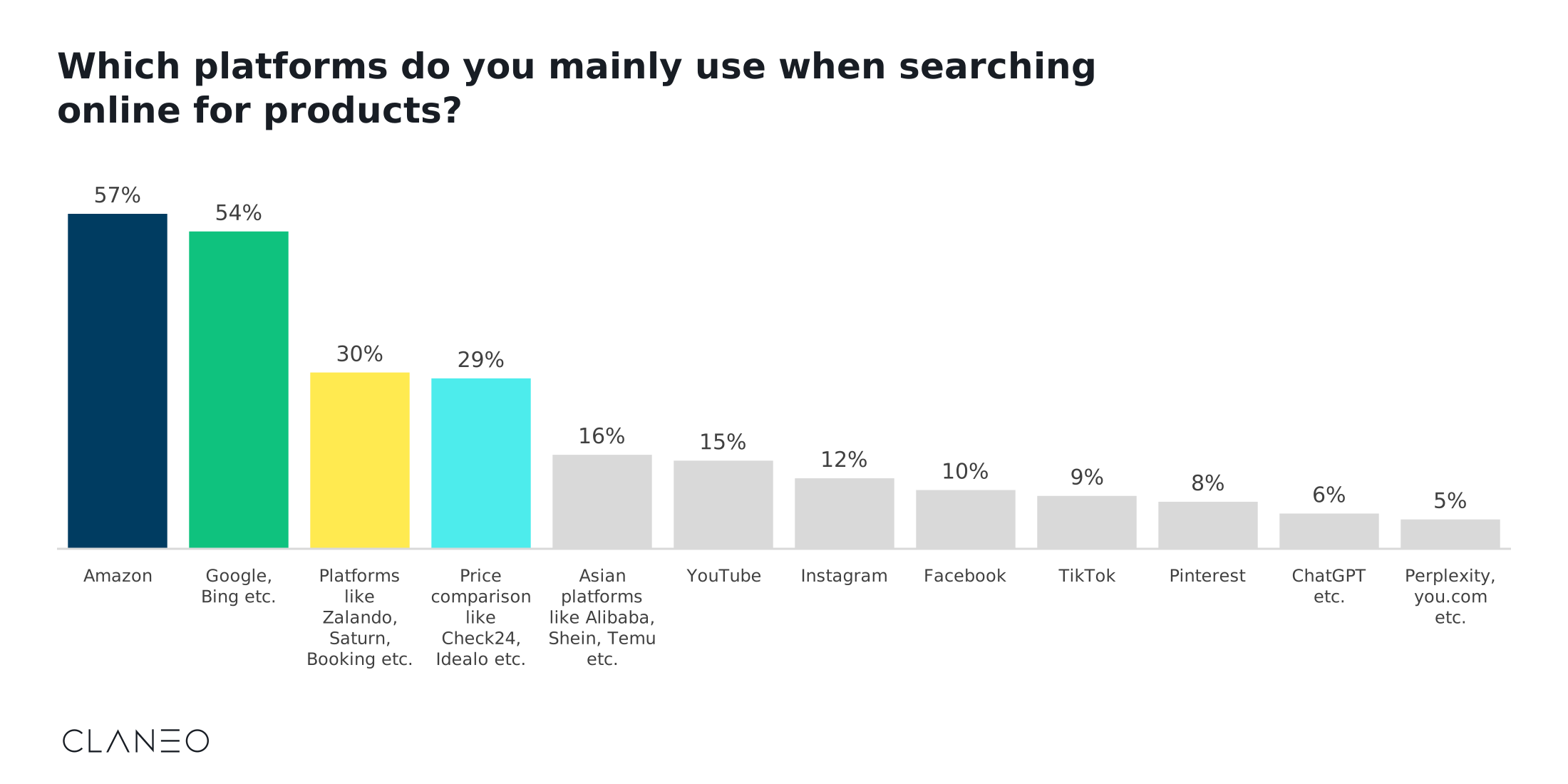
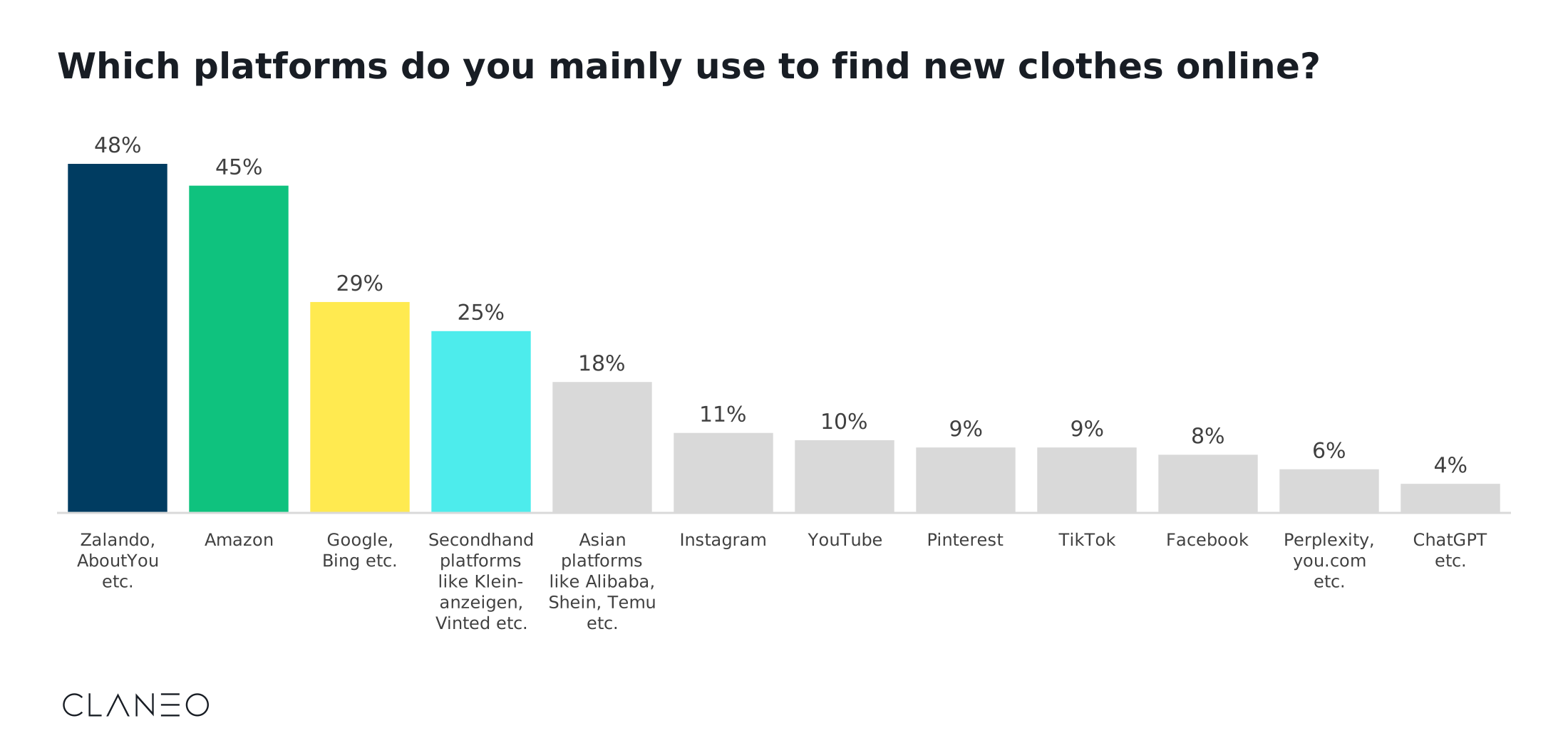
Search engines like Google fall much further behind when it comes to clothing. In no other industry we studied do traditional search engines play such a small role, although at around 29% it is still significant. For clothing, online platforms like Zalando and AboutYou take first place and are mainly used by almost half of respondents. Amazon follows. Amazon is already number 1 for clothing in many countries, partly because elsewhere there are no well-known competitors like Zalando and AboutYou in Germany. There is also a small age difference: secondhand marketplaces and Asian platforms are much more relevant for younger people. Social media shows smaller differences, although it is worth noting that Pinterest plays a relevant role for 17 percent of 16 to 27-year-olds when searching for clothing.
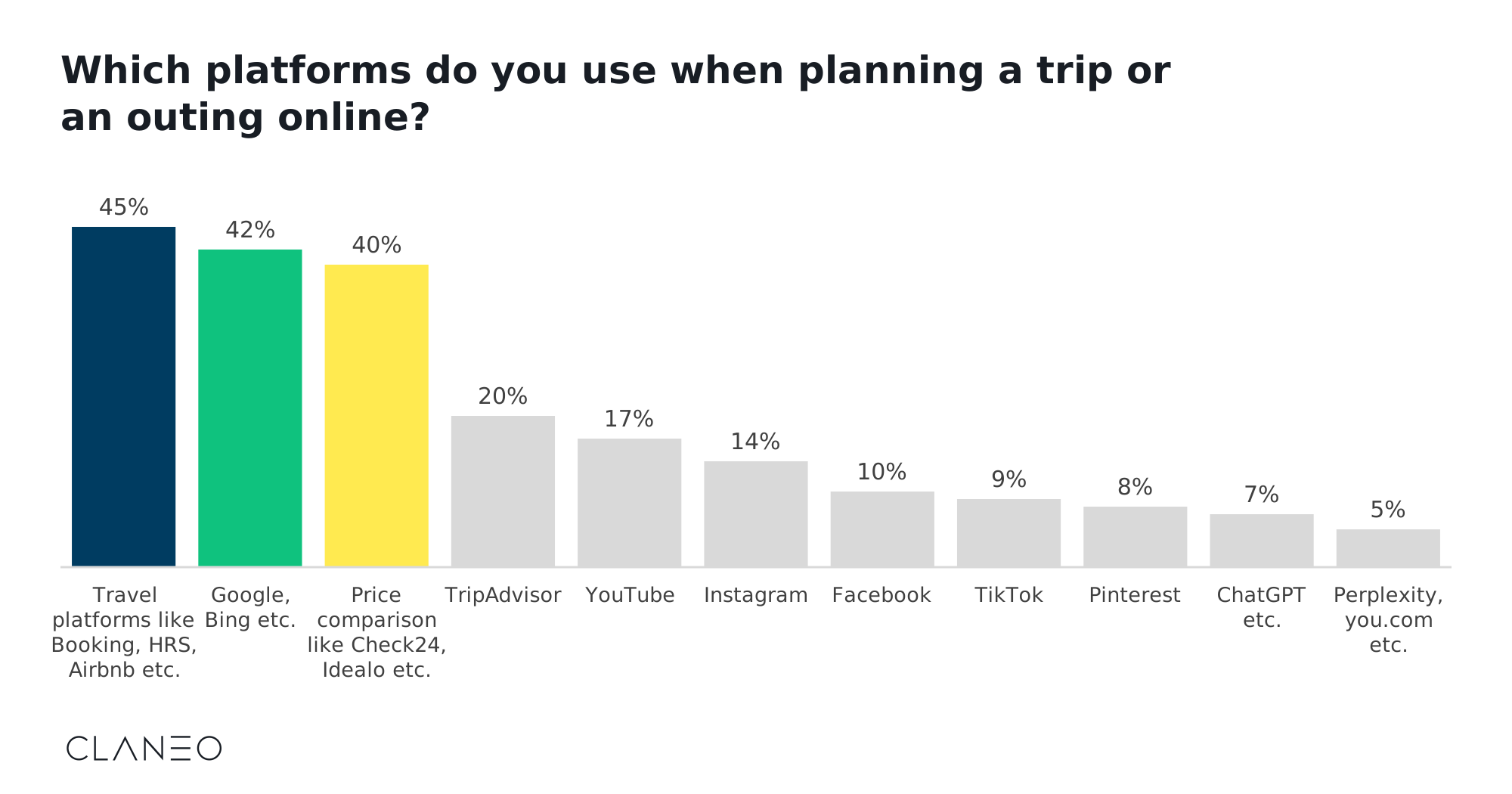
Generational differences in travel planning
Conclusion: online search is becoming more diverse
Like other digital PR campaigns of ours, our survey delivered some fascinating insights. Search engines like Google are and will remain the leader, first destination and most important platform in many topic areas for now. Searchers especially value them for information, how-tos and topics that need explanation. Trustworthiness and being up to date are important, and X (Twitter) and Asian platforms like TikTok, Alibaba and Temu show clear deficits here. Ultimately, though, user numbers show that few people are really put off by this. These platforms are used much more for entertainment and are well suited for spontaneous impulse purchases that require no research. Younger age groups more often use social media or secondhand platforms to search for travel or products, while older users rely more on established online travel and shopping platforms. Overall, the generational difference is smaller than first assumed. Online search is becoming increasingly diverse, and people search in different places depending on their (demographic) characteristics. People switch between platforms depending on what they are looking for and why. For everyone, however, one thing holds true: search engines like Google are still the State of Search 2024.
When reporting on this survey, which involved considerable effort, please link to this page as the source. The charts on this page may be copied and used with attribution or sent on request.
The survey was conducted from April 19 to 23, 2024 using the market research platform Appinio. Of the 1,001 participants, 500 were women and 501 were men. To obtain meaningful data and allow comparisons between age groups, we did not use a population-representative distribution. Instead, we made sure to collect 250 qualified responses in each of the 4 age groups (16 to 27, 28 to 39, 40 to 51, 52 to 65), with equal shares of men and women. All age groups were therefore weighted equally and are comparable. To simplify the presentation, certain answers with very low agreement were not shown in the charts for individual questions. The full data set can be provided on request. Despite careful processing, no liability can be accepted for the accuracy and completeness of the data.


Digital PR
We support you holistically in developing successful digital PR strategies. From the first brainstorming and idea generation to content creation, including visual and technical preparation and implementation, to targeted seeding: you benefit from our expertise from numerous successful projects.

Content Marketing
We design holistic content marketing campaigns and develop sophisticated seeding strategies with maximum impact. Our focus is on marketing informative content rather than simply promoting services or products. You can rely entirely on our expertise when implementing value-adding content marketing campaigns on your website.


